District Innovation and Enterprise Challenge
Concept I · College Students

District Innovation &
Enterprise Challenge

जिले की जड़ें, उद्यम की नींव
Teams of 2–5 · Open nationally · Free
In Development

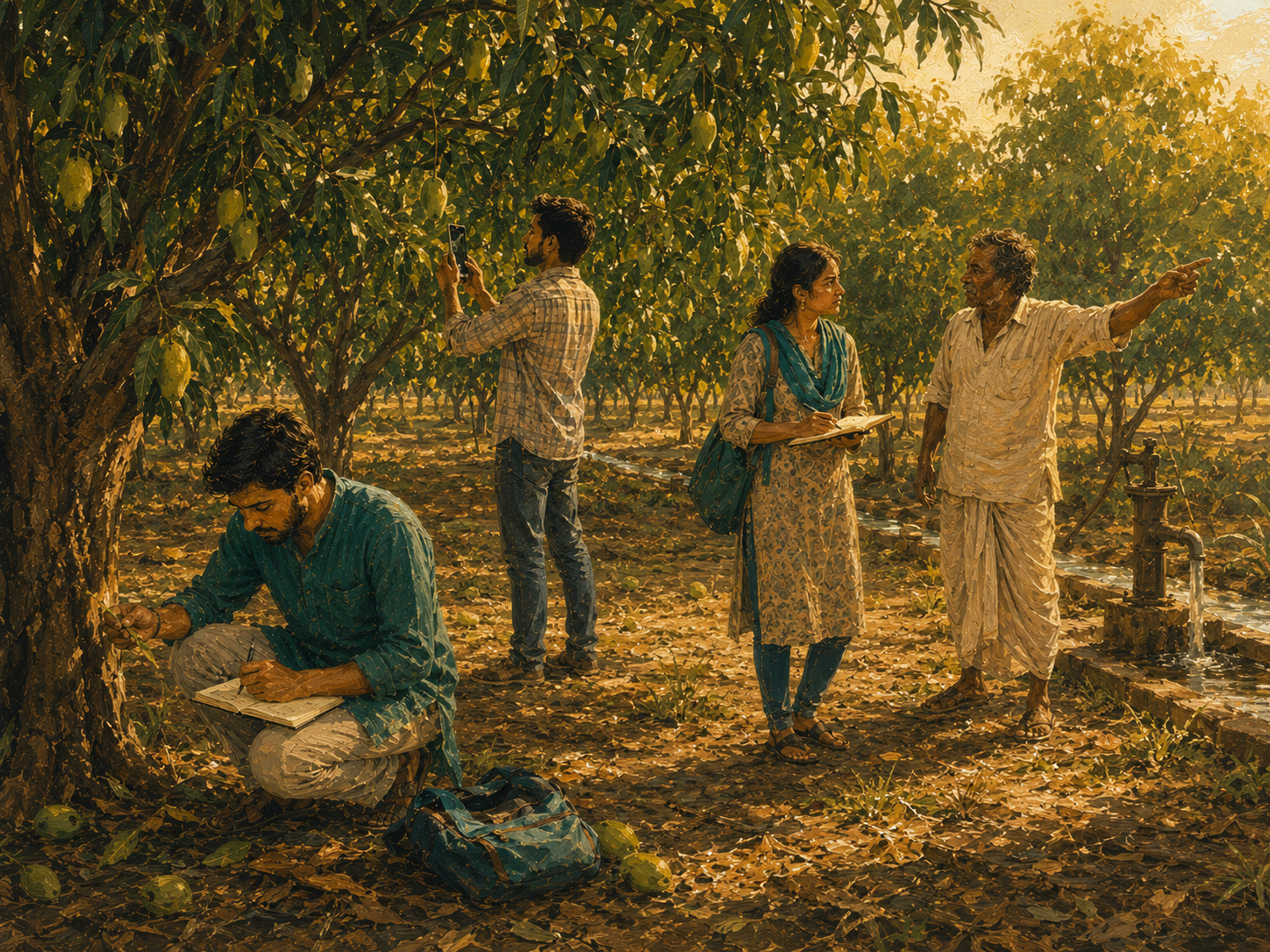
The premise is straightforward and the execution is demanding. College students — from anywhere in the country — choose a specific district in Bihar and make it the subject of serious inquiry. Not Bihar in the abstract. One district. Its economy, its geography, its real problems, its underutilised assets, its particular conditions.

From that understanding, they build an enterprise model. A real one — with revenue logic, with technology integration, with a clear sense of who the customer is and why they would pay. The evaluation weights district understanding as heavily as the quality of the idea. You cannot score well here without actually knowing the place.

The goal is not to find exceptional founders. It is to build people who know a place well enough to build in it — not generalist optimisers applying borrowed frameworks to an abstraction called Bihar.

This constraint — the district specificity — is the entire point. Most student innovation programmes reward clever ideas that could be anywhere. This one rewards ideas that could only be here, built by someone who has taken the trouble to understand here. The district is not a setting. It is the source.

Four phases move teams from observation through to a live jury presentation in Patna. The process is structured enough to be rigorous, open enough that the answers must come from the teams themselves. Workshops, mentorship, and recorded pitch submissions sit between the concept note and the final day — so by the time a team walks into Samvad Divas, months of real work stand behind them.
Programme Structure
01
Concept Note Submission
Teams identify their district, name the problem, and articulate why they are the right people to work on it. The concept note is the first filter — it rewards specificity over ambition.
02
Virtual Workshops
Shortlisted teams enter structured capacity-building sessions — on field research methods, systems thinking, revenue model design, and district-specific context. Mentors from the Samvad network are assigned here.
03
Recorded Pitch Submission
Teams submit a recorded presentation of their enterprise model. Finalists are selected and announced. This stage tests whether the idea has deepened through the workshop period — or remained at the level of the concept note.
04
Final Jury · Samvad Divas · Patna
Selected teams present before a live jury in Patna. Not a pitch competition in the theatrical sense — a serious examination by people who know the district conditions, the capital landscape, and the real constraints of building in Bihar.
Who
College and university students, anywhere in India
Team Size
2 to 5 members
Cost
Free. Selected finalists travel to Patna.
Core Constraint
One specific district of Bihar. No abstractions.
Sthān aur Pehchān — Mera Sthan, Meri Pehchan
Concept II · School Students · Class 7–12

Sthān aur Pehchān

मेरा स्थान, मेरी पहचान
Teams of 3 · Class 7–12 · Free
In Development

This programme begins with a conviction that sits at the heart of everything Samvad does: Asmita — identity, pride, the felt sense of belonging to a place — is not taught. It is discovered. And the conditions for discovery are not created by telling a student about their heritage. They are created by placing that student in active relationship with it.

Sthān aur Pehchān asks school students — teams of three, from Class 7 to Class 12 — to document what is good and alive in their district. Not what textbooks say about it. Not what the internet tells them. What they find when they go to the field, conduct community interviews, and look closely at the ecology, the economic life, the historical memory, and the cultural inheritance of the place they live in.

The poster is the smaller part. The actual work is the months of observation that produce it — and what those months do to how a young person sees the ground under their feet.

The output is an A1 exhibition poster, displayed at Samvad Divas. But the poster is not the point. The point is what the process produces: a young person who has conducted fifteen to thirty interviews with their own community, documented the ecology and economic life of their district, and arrived at a personal vision of what that place could become by 2040.

Why this matters — the Asmita argument

A student in Bhagalpur today likely does not know that Manjusha art — born in his district — is one of Asia's oldest complete-narrative folk traditions, its serpent-bordered sequential panels anticipating the graphic novel by a millennium. He does not know that the language spoken around him descends from Magadhi Prakrit, the language of the Buddha's own sermons. He does not know these things — and therefore has no relationship with them.

You cannot feel the loss of what you have never encountered. You cannot build on soil you do not feel belongs to you.

Sthān aur Pehchān does not tell students these things. It creates the occasion for them to discover them. When the discovery is theirs, the pride is theirs. When the pride is theirs, the responsibility follows. The economic failures — the unclaimed assets, the unbranded produce, the cultural diplomacy that doesn't exist — are symptoms of this prior absence. This programme works at the root.

What Teams Produce
01
Field Observation
Not internet compilation. Teams go to the field — documenting what they observe about their district's ecology, agriculture, craft traditions, and daily economic life. The instruction is to look, not to search.
02
Community Interviews
Fifteen to thirty interviews with members of their community — elders, artisans, farmers, teachers, traders. The questions are simple: what has this place always been good at? What has been lost? What do you wish someone would build here?
03
Documentation
Local ecology, historical memory, community strengths and challenges — assembled into a coherent picture of the district as it actually is, not as it is officially described.
04
Vision 2040 + One Enterprise Idea
What could this place become? Teams write a short vision and propose one small enterprise idea rooted in what they discovered. Not a startup pitch. A seed — planted in real soil.
05
Exhibition Poster · Samvad Divas · Patna
The work is presented as an A1 exhibition poster at Samvad Divas — displayed alongside the adult conversation, not as a student showcase but as evidence that the next generation is already paying attention.
Who
School students, Class 7–12
Team Size
3 members
Cost
Free. Selected finalists travel to Patna.
Core Method
Field observation and community interviews — not internet research.

The room comes first.
Then the programmes.

Samvad Divas in August 2026 is where the adult community gets built — the mentors, the institutions, the district-level relationships that make these programmes real rather than symbolic. If you are an educator, an institution, or someone working at the district level in Bihar, the most useful thing you can do right now is be in that room.

If you want to be part of building these programmes when they launch, reach out. We are looking for people who understand a specific district well — not generalists, not well-wishers, people with ground-level knowledge who are prepared to commit time.

Attend Samvad Divas → Reach Out on LinkedIn →

The programmes launch when the community built in August is ready to receive them.